It was during the third medieval period that the productive forces reached a level at which capitalist relations became widespread in the midst of the feudal economy. This process is related to the emergence of the bourgeoisie, the class which owned the means and instruments of production, and the proletariat, the class of hired workers, deprived of these means and forced to sell the capitalist their labour power. The capitalist-owner of the means and instruments of pro- duction-began forcing the worker to labour more than was necessary to sustain his own life and the life of his family. As a result, surplus value was created and was appropriated by the capitalist. This appropriation of surplus value is a spe- cific form of exploitation under capitalism and is its basic law.
The development of commodity – money relations was the basis on which the Russian centralised state was created . The united Russian market evolved in the 18th century , but its sources go back to the 16th century , when town crafts and local markets entered a period of rapid growth . In the early 1580s there were close to 200 various crafts in Novgorod and close to 100 in Kazan . The main feature of craft pro duction was its great diversification . The metal workers were subdivided into pin – makers , button – makers , etc .; there were bow – makers , sword – makers , dagger – makers , etc .; in the manu facture of clothing there were specialists for every garment worn . The social division of labour brought about an increase in trade . In the 16th century many Russian towns were major trading centres . In Pskov in the 1560s – 1570s there were a trading court , where most of the commercial transactions took place , and a total of 1,300 other trading premises ; in Kazan there were 644 ; in Kolomna , near Moscow , there were close to 450 . Peasants brought their produce to the market in town . Local markets began establishing ties among themselves . Thus , there were the so – called trading courts , known as the Tver and Pskov Courts , in Novgorod in the 16th century . There were fairs in some regions . Moscow , which had become a major centre of crafts and trade in the 15th century , was the binding link in inter – city trade . Foreign trade was fast developing . There were many trade routes to the Baltic regions . The Volga route connected the European markets with the Caspian area and Central Asia . The development of commodity – money relations created a more complex social structure of society and increased differentiation among the craftsmen , merchants and peasants . The leading merchants formed a separate estate , the mer chants ‘ guild , and two privileged ” hundreds of merchants and cloth – makers . Documents of the time mention ” middle ” merchants and town craftsmen , as well as ” black people ” , the poorest stratum of the population . In the villages a stra tum of wealthier peasants emerged from among the serfs , having bought their freedom from their masters ; these peas ants often became craftsmen or merchants .
The Oligarchy ( Sparta ) The entire population of Sparta was divided into three large groups : the Spartiates , who were full – fledged citizens , the perioeci , who were free but had no political rights , and the helots , who were , to all extents and purposes , the slaves of the Spartiates . The Spartan communes owned all the land , and each member had his own holding . The possession of land in Sparta was a prerequisite for citizenship . The land was tilled by the helots , who received but a small share of the harvest . In order to keep the helots in constant fear and submission , the Spartiates would regularly organise bloody massacres . The helots , as the land they tilled , were considered to be the community property of the Spartiates , who could neither sell them nor assign them to someone else . The helots often mutinied ; thus , the major uprising of 464 B.C. nearly led to the downfall of the Spartiates . The perioeci , who enjoyed personal freedom , were crafts men and traders . Unlike the Spartiates , they had the right to own property ; they also could join the Spartan army . However , they did not enjoy political rights and were obliged to pay a tribute to the Spartiates . Although the Spartiates comprised but a small part of the population , there was an influential and wealthy group among them . The two kings who headed the Spartan community belonged to this group . The kings were simply members of the council of elders ( gerousia ) , the highest governing body of the oligarchal rule . At the end of the 7th century B.C. Sparta headed the Pelo ponnesian League , which included the city – states of Pelopon nes . Sparta , a backward slave state , became the stronghold of reaction in Greece , the Spartiates attempted to establish and support the rule of the slave – owning aristocracy in all the polises .
The defeat of the revolutions in France , Germany and Italy was followed by a period of reaction . But the working class was no longer the former unconscious and unorganised class and did not want to be led by the bourgeoisie which betrayed it at every opportunity . The leaders of the proletariat – Marx and Engels and their adherents – learned serious lessons from the defeats of the revolutions of 1848. The experience of the struggle of the proletariat confirmed the correctness of the theoretical conclusion drawn in the Mani festo of the Communist Party on the necessity of uniting the workers of all lands . For this purpose Marx and Engels organised the International ( September 28 , 1864 ) , the first international association of workers based on the Union of Communists founded as early as 1847. The Constituent Manifesto and Rules ( drawn up by Marx ) of the International Association of Workers , as the International was initially called , contained the basic propositions of Marxism on the working class and its main mission of winning political power by common efforts and of building a new society . The International was organised on principles of democratic centralism , i.e. , elec tion of all bodies from top to bottom and subordination of the lower bodies to the higher bodies . The International was divided into national sections which were supposed to pursue the single line of the International . The very first steps of the International showed the workers its usefulness ; if a strike was organised in one place or one country , the workers of other countries sup ported the strikers , kept strikebreakers away from there , etc. The International grew increasingly more popular with each passing day . But the International also encountered quite a few difficulties in its activities . Many participants of the working class movement did not understand scientific communism and were under the influence of various petty – bourgeois theories . For example , the workers were considerably influenced by the theories of Proudhon and Lassalle who advocated only an economic struggle against the bourgeoisie . Marx and Engels showed that a purely economic struggle of the working class might bring only temporary success , but could not change the conditions of the workers , could not bolish exploitation . Only the assumption of power by the working class and abolition of private property is the yoke of capitalism . However , Marx did not in any way deny the importance of the economic struggle of the constituent element of the class struggle of the proletariat .He never advocated only violent revolutions , as it is incorrectly ascribed to him in the West , but held that with the existence of democratic liberties the working class could also assume power peacefully . Marx’s adherents in the Inter national therefore always strove to maintain close relations with trade unions and other organisations of the working class . The importance of the International was enormous . It played an important role in linking socialism with the working – class movement and in elaborating common tactics of the proletariat in its struggle for emancipation . The principle of proletarian internationalism is one of the foundations of the modern working – class movement . Within the framework of the International Marxism prevailed upon all the petty – bourgeois trends in socialism . The International paved the way for the creation of mass working – class socialist parties on the basis of national states .
Origin and Development of a Revolutionary Situation
Origin and Development of a Revolutionary Situation primarily the living standards of the peasants and workers . The crisis of Russia’s economic development affected The yoke of feudal obligations kept increasing . The countryside continuously starved because of crop failures , loss of cattle and lack of arable land and pastures . The poverty of the peasants led to epidemics , increased morbidity and mortality , and a decreased birth – rate . The serf system destroyed the rural workers , the most important productive force of the society of that time . The worsening of the peasants ‘ conditions stimulated their struggle against the landowners . The peasants refused to pay quit – rent and to perform the feudal services , ran away from the landowners , set fire to the landowners ‘ estates , beat and killed the serf – owners and their stewards . Between 1826 and 1861 , there were 1,186 serf uprisings . The disturbances involved almost every part of the country . In the outlying national districts this movement merged with the struggle of the peoples against national oppression ( Cauca sus , Poland , etc. ) . The struggle of the peasants was supported by workers who experienced the oppression , brutality and arbitrary rule not only of the proprietors and factory administration , but also of the landowners . The Russian peasants struggled for land and freedom , i.e. for abolition of the feudal dependence . Objectively these demands of the peasants were aimed at creating favourable conditions for the development of capitalism in Russia . The actions of peasants and workers were savagely suppressed by tsarism . The laws , prisons , army and all the policies of the landowner state defended the interests of the land- and serf – owners and hampered the development of new produc tion relations in Russia . The socio – economic development of the country required the removal of these obstacles by a social force which was interested in creating new production relations . The peasants were heterogeneous and disunited ; they were concerned only with their local interests and therefore could not combine their efforts to wage a revolutionary struggle for their demands . Only the working class could be the revolutionary leader of the peasantry , but at that time Russia had as yet no working class . The Russian bourgeoisie interested in the capitalist development of the country was economically and politically weak . By its origin it was in large measure connected with the landowner class . It had good knowledge of the bourgeois revolutions in Western Europe , saw the increasing struggle of the West – European proletariat and therefore feared the revolution . Afraid of a peasant war the Russian bourgeoisie only tried through the lips of liberals to persuade the land owners and tsarist officials to make a concession to capitalist development , to ” emancipate ” peasantry and thereby avoid revolution , abolition of landowners ‘ property rights and liquidation of autocracy . The aggravation of the crisis of the serf system led to a new stage of the revolutionary movement in Russia . The spokesmen for the peasantry in the 1840s – 60s were progres sive intellectuals who were cognisant of the aspirations of the labouring peasants . They stemmed from the petty clergy , officialdom , petty bourgeoisie , merchants , peasantry and declassed nobility and were revolutionary democrats by conviction . They were fully aware of the savagery of serfdom and unmasked it . They formulated the demands of the peasants as a programme of complete abolition of serfdom and of making land available to peasants without redeeming it from the landowners . The revolutionary democrats exposed the serf character of the projected ” emancipation of the Russian peasants from above . Many of them held that the people could obtain satisfaction of their demands only by abolishing the landowners ‘ property a rights and overthrowing the power of the land and serf owners by means of a peasant revolution . The Russian revolutionary democrats acted at the time when the revolutionary character of the bourgeois democracy in Europe was already dying off . The experience of the West showed them the miseries capitalism brought to the people . In connection with this , some of them who did not understand the new way of revolutionary development , in which the principal role is played by the proletariat , brought forward the utopian theory of a ” peasant socialism ” . In this theory the exposure of serfdom and the criticism and rejection of the capitalist system were combined with demand for a transition from backward Russian reality directly to socialism through development of the peasant community , which existed in Russia , with its ” everybody’s right to land ” , self – government , etc. The ideas of ” peasant socialism ” reflected the revolutionary aspirations of the peasants to equality , abolition of the landowners ‘ property rights and overthrow of the rule of the land- and serf owners . But this theory was far from scientific socialism because it rested on survivals of old social relations , on the disintegrating peasant community . Russia’s road to socialism ran through the stage of capitalist development . The revolutionary democrats – A . I. Herzen , V. G. Belinsky , N. G. Chernyshevsky and N. A. Dobrolyubov – deeply hated serfdom and tsarism and called on all progressive Russians to struggle against autocracy . Chernyshevsky demanded complete abolition of serfdom without redemption , complete freedom and a free transfer of all the land to the peasants . By castigating autocracy and serfdom the revolutionary democrats educated the progressive intellectual youth in a radical spirit and the youth started organising political circles . The proclamations of the revolutionary democrats unmasked the contemplated deal between tsarism and the landowners . Cheryshevsky called on the peasants to rise against tsarism and serfdom . ” Tell the Russian people to take up battle – axes , ” Chernyshevsky taught the revolution aries . The heroic efforts of the democratic forces in Russia did not suffice to organise and lead the struggling peasantry : The peasants waged a bitter struggle for land and freedom , which attested the existence of a revolutionary situation in Russia , but they were not organised politically and were incapable of overthrowing serfdom . Despite that the revolutionary upsurge was one of the most important factors that forced the landowners to abolish serfdom in Russia .
In the 1860s the relations between the northern industrial states and the southern slave owning states became extremely strained . The development of the northern states proceeded in the direction of industry and farming and was based on a system of hired labour . Contrariwise , the plantation economy of the southern states was based on slave labour . The slave plantation economy was conducted by predatory methods . The planters used no fertiliser and every three or four years started cultivating new lands , abandoning the old ones . This system of economy required vast spaces . The slave – owning planters moved westward , as did the farmers from the eastern and north – eastern states and the emigrants from Europe . The antagonisms between the farmers and slave – owning planters were becoming sharply aggravated in the struggle for the lands in the West . There were also sharp antagonisms between the industrial bourgeoisie of the North and the North – East and the slave owning planters . Slave – owning impeded the economic development of the southern states , which affected the volume of the internal market for the industry of the North and North – East . The capitalists of the northern states were extremely short of labour and regarded the Negro slaves as their future wage – workers . The southern planters exported cotton , tobacco and other products to England and from there imported the necessary industrial commodities . That roused the discontent of the capitalists of the North and North – East since such foreign trade of the South deprived the northern manufacturers of markets and sources of raw materials . The slave – owning plantation system experienced a deep crisis . The extensive methods of agricultural economy on the plantations of the South exhausted the land . Slave labour on which the slave – owning plantation system was based hampered the introduction of new agricultural machinery . Great difficulties in purchasing slaves arose , the average price of a slave , which was 150 dollars in the beginning of the 19th century , increasing to 2,000 dollars in 1860 , The slaves revolted and ran away from the plantations . The slave – owning planters did not confine themselves to domi nation in the southern states , but moved westward with the aim of expanding their plantations . In its domestic and foreign policies the government of the U.S.A. supported the interests of the slave – owners and encouraged the slave – trade . The slave – owning planters demanded an aggressive expan sionist foreign policy and advocated a programme of per petuating slavery . They regarded the aggressive war of 1846 48 against Mexico as the first stage of transforming South and Central America into a province of their slave – owning empire . The Republican Party which was organised in the North in 1854 and expressed in the main the interests of the big bourgeoisie , advocated the opening of lands in the West to free settling and opposed slavery . In 1860 Abraham Lincoln , Vice – President of the Republican Party and Member of the House of Representatives , was elected President of the U.S.A.
CIVIL WAR OF 1861-65 IN THE U.S.A. Causes of the War
The American Civil War , especially during its second stage , was of the nature of a bourgeois – democratic revolu tion . The popular masses waged a just revolutionary war of liberation against slavery , and victory was achieved by their heroic efforts . Workers , Negroes and farmers formed the main driving force of the revolution under the leadership of the progressive bourgeoisie . As the result of the vigorous actions of the popular masses the Civil War put an end to the political and economic disunion of the country , created the possibilities for rapid development of capitalism by eliminating the obstacles which hindered the transformation of the U.S.A. from an agrarian country into an industrial agrarian country , and contributed to the farmer ( so – called American ) way of development of capitalism in agriculture . The Civil War consolidated the political dominion of the country’s big industrial bourgeoisie by eliminating the claims of the slave – owners to power . The fruits of victory were reaped mainly by the big bourgeoisie which strove for a compromise with the planters . In 1865-66 the planters introduced anti – Negro ” black codes ” , set up Ku Klux Klan terrorist organisations , etc. Freed from slavery but devoid of land the Negroes found themselves in bondage to the planters and transformed into share croppers . The dependence of the farmers on banks increased . The big bourgeoisie consolidated its dictatorship and enriched itself by intensifying the exploitation of workers . The Civil War tremendously influenced the economic development of the U.S.A. In the last third of the 19th century capitalism in the U.S.A. developed uncommonly rapidly . In 1840 the U.S.A. held the world’s fifth place in industrial output ; in 1860 they advanced to fourth place . Until the end of the Civil War the U.S.A. were economically a European colony . In 1870 the U.S.A. were second in industrial production only to England , while in 1894 they became the world’s leading industrial power , turning out half the total industrial production of the capitalist countries . From 1860 to 1895 industrial production in the U.S.A. increased sevenfold . The following reasons for the rapid development of capitalism in the U.S.A. should be mentioned : long exist ence of a bourgeois – democratic republic ; absence of feudalism ; enrichment as the result of many wars in Europe ; chances to utilise European technology and capital ; rich natural resources ; rapid development of engineering ; immigration of millions of Europeans , Asians and Latin Americans ( more than 14 million immigrants came to the U.S.A. between 1860 and 1900 ) ; cruel exploitation of immigrants , Negroes and Indians ; plunder of neighbouring states and territories .
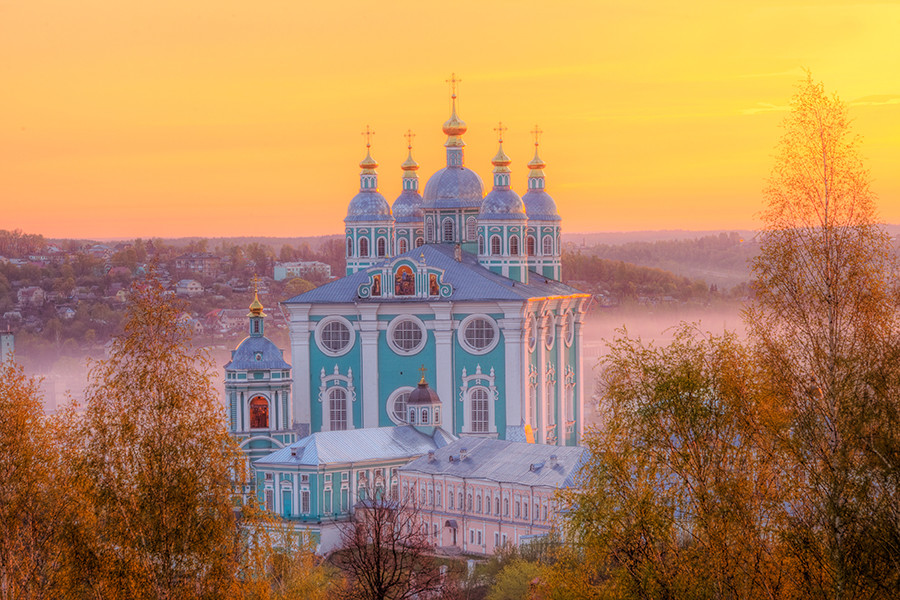
By the 10th century Kiev was an important Russian city . At this time Novgorod , too , was established as a major cen tre of crafts and trade . The cities of Chernigov , Smolensk and Polotsk all played an important part in the economic life of Ancient Rus . Moscow appears as a city with extensive trade routes in the 9th century and began to develop rapidly in the middle of the 12th century , becoming the capital of the principality of Muscovy early in the 13th century . The majority of Russian cities were built according to the following plan : a fortified area with a moat and very thick walls ( a kremlin ) was erected in the middle of a town ; this was the residence of the duke or military commander , his garrison and courtiers . Settlements of merchants and crafts men were located around the kremlin . The ancient Russian cities traded with the regions along the Volga , the Caucasus , Byzantium , Central Asia , Iran , the Arab ian countries and the countries of the Mediterranean . There was extensive trade between Muscovy and the Northern Slav ic Pomorye , Scandinavia , Čechy , Moravia , Poland , Hungary , Germany and other countries .
In the villages the goods produced by the highly skilled craftsmen were never in great demand . Besides , the craftsmen were beginning to feel stifled by feudal exploitation . The peasant – craftsmen had a stimulus to leave the feudal estate and go where they could sell their goods , free from the oppression of their feudal lords . Some peasant – craftsmen simply ran away , others left the village with the permission of their lord , being bound to pay
The crisis of the empire , which first became evident in the socio – economic sphere , soon spread to its ideology as well . The religious and philosophical systems that were prevalent among the ruling class became more and more pessimistic . Thus , the views of the Stoics underwent considerable change : When the Roman Empire was in its prime the contention of Stoicism that one must sacrifice one’s self in the interests lof society helped strengthen the rule of the slave – owners . Now , with the decline of the Roman Empire , it helped spread an attitude of pessimism and hopelessness . The idealist , mystical philosophy known as the system of Plotinus gained popularity in the 3rd century A.D. According to Plotinus , evil and matter were synonymous . He believed that man’s goal was his spiritual merger with an undefined supreme good , imperceptible to the human mind . Literature took on a religious and philosophical colouring , as is apparent in the very popular form of the novel ( for example , The Golden Ass of Apuleius ) . In the 4th and 5th centuries A.D. , during the fall of the Roman Empire , the pagan philosophies which were gradually being replaced by Christianity merged with demonology , black magic and astrology . The triumph of the Christian Church was accompanied by the destruction of many pagan monuments of Antiquity . At the same time , in its desire to gain popular support , Christianity adopted many pagan ways .
Thus , Christmas was made to coincide with the day on which the Sun god , Mitra , was celebrated . In the eastern provinces , where the cult of the goddesses of fertility ( Isida , Astarta , Cybela ) was widespread , the cult of the Madonna developed . Ils subject matter consisted chiefly of eulogies in honour of Literature catered to the tastes of a narrow circle of courtiers . the various emperors . The overall cultural level dropped sharply during this period .



 Capitalism Society