Citizens ! The revolutionary proletarian movement is growing and national barriers are collapsing ! The proletarians of the different nationalities in Russia are uniting in a single international army , the individual streams of the proletarian movement are merging in one general revolutionary flood . The waves of this flood are rising higher and higher and dashing against the tsarist throne with increasing force – and the decrepit tsarist government is tottering . Neither prisons nor penal servi tude , nor gallows – nothing can stop the proletarian move ment : it is continuously growing ! And so , to bolster up its throne the tsarist government is inventing ” new ” methods . It is sowing enmity among the nationalities of Russia , it is inciting them against one another ; it is trying to break up the general proletarian movement into petty movements and to incite them against one another ; it is organizing pogroms against the Jews , Armenians , etc. And the purpose of all this is to separate the nationalities of Russia from one another by means of fratricidal war and , by enfeebling them , to vanquish them one by one without difficulty !
Spain and Portugal were the first colonial empires . Sharp colonial and sea – trade rivalry developed between the two countries . To avoid an open conflict , they concluded an agreement in 1529 ; according to the agreement the world was divided in two halves , from pole to pole , the Spaniards having the right to seize colonies in one half and the Portuguese in the other . That was the first colonial division of the world . But the antagonisms between Spain and Portugal did not disappear and other invaders – Holland , England and France – began to appear in the world arena . In the 17th century , crowding out Spain and Portugal , Holland became one of the largest colonial powers . Dutch conqueror merchants had penetrated into India as far back as the end of the 16th century . A united East – India Company was organised in 1602 ( it existed until 1798 ) ; the company had a monopoly right to trade in the Indian and Pacific oceans . The Dutch merchants and their hirelings enslaved the people of Indonesia and predatorily exploited the riches of this tropical country . They annihilated the ” superfluous ” ( from the Dutch point of view ) population of the islands and burned a mass of valuable products in order to keep up high prices . In 1621 the Dutch set up the West – India Company which conducted operations on the American continent . colonial knowledge and In the middle of the 17th century the Dutch forced the Portuguese out of the southern part of Africa and founded their own colony – the ” Cape Colony ” . In 1656 the Dutch crowded the Portuguese out of Ceylon . But Holland was predominantly a trading country with a less developed industry , and in the sharp rivalry between Holland and industrial England the latter gained the upper hand . In particular , as the result of Anglo – Dutch wars , the English took the place of the Dutch in North America . The English colonial rise was hindered primarily by the powers – Portugal and Spain . With the approval of their government and without declaring war English warships attacked Spanish sea caravans sailing from America to Europe and looted them . The culmination of the Anglo – Spanish colonial and naval rivalry was the misfortune of the famous Invincible Armada ( 1588 ) destroyed by the English fleet . England rapidly became the ” ruler of the waves ” . However , it was not this high – sounding title that the young English bourgeoisie needed . The rule of the waves was a means of achieving domination on land . By the 17th century England had completed the conquest
There was a time when our labour movement was in its initial stages . At that time the proletariat was split up into separate groups and did not think of waging a common struggle . Railway workers , miners , factory workers , artisans , shop assistants , and clerks – such were the groups into which the Russian proletariat was divided . Moreover , the workers in each group , in their turn , were split up according to the towns , big or small , they lived and worked in , with no link , either party or trade union , between them . Thus , there was no sign of the proletariat as a united and indivisible class . Con sequently , there was no sign of the proletarian struggle , as a general class offensive . That is why the tsarist gov ernment was able calmly to pursue its ” traditional ” policy . That is why , when the ” Workers ‘ Insurance Bill ” was introduced in the State Council in 1893 , Po bedonost sev , the inspirer of the reaction , jeered at the sponsors and said with aplomb : ” Gentlemen , you have taken all this trouble for nothing ; I assure you that there is no labour problem in our country . … ” But time passed , the economic crisis drew near , strikes became more frequent , and the disunited prole tariat gradually organized itself in a united class .
Prior to the emergence of Neanderthal Man , human beings lived in large herd – like groups . The retention of this herd like existence was predetermined by the extremely low level of the productive forces . Man , armed with the most primitive tools , could provide for his survival only through his association with a large group of humans . Even in the gathering of grasses and fruits such a group was necessary to provide for mutual defence when wild beasts fell upon them . When man adopted hunting as his way of life , the joint efforts of the group of men and women guaranteed a greater measure of success in obtaining the means of subsistence . Labour was having an ever – increasing influence on the development of a communal way of life , while all production activity demanded that human beings band together . Only in a commune was it possible to retain and pass on skills and experience , the basis of production development , to future generations .
In studying capitalist society we encounter first of all the concept of capital . What is capital ? What do we imply by this term ? There are many concrete manifestations of capital . In any bourgeois country capital may be money , machinery , build ings , ready – made goods , etc. The first conclusion that can therefore be drawn is that capital is value . However , not every value is capital . A worker’s wages are paid in money , but this does not mean that the worker has capital . A peasant has a house and agricultural implements , but this property is not capital either . Money , like any other value , becomes capital only when it increases its value , i.e. , when it produces surplus value . We can therefore extend the first conclusion by defining capital as value which produces surplus value . intrinsic Bourgeois science asserts that profit is an property of capital . However , capital cannot of itself pro duce surplus value . Capital increases its value only when it unites with labour , i.e. , in the process of production . Capital exploits the worker who by his labour creates surplus value which in its turn increases capital . It follows that capital is value which produces surplus value by exploiting wage – workers . Whatever its concrete form , capital is not merely a thing . Capital embodies certain production relations between the capitalist class and the class of wage – workers , and these relations are expressed in exploitation of man by man . In defining capital bourgeois economists usually imply by it the means of production . This view was held by Adam Smith and David Ricardo , representatives of English classical bourgeois political economy . Ricardo , for example , regarded as capital the stone and stick , i.e. , the primitive tools of primitive man . Bourgeois science still continues to identify capital with the means of production . It strives to represent capital as the eternal and natural condition of any produc tion . The ” finding ” of capital in primitive society serves precisely this purpose . The ” theory of eternal existence ” of capital is supposed to confirm the ” theory of eternal existence ” of capitalism . Bourgeois economists misrepresent the history of the origin of capitalism and of the formation of classes in capitalist society . According to them , hard – working and thrifty people became capitalists , while the lazy people who had squan dered all their property became workers . These fabrica tions have nothing in common with historical truth . Primary accumulation of capital was marked not by thrift , but by real plunder of the colonies , forcible dispossession of peasants , and rigid laws against the poor in order to create a capitalist labour discipline .In studying capitalist society we encounter first of all the concept of capital . What is capital ? What do we imply by this term ? There are many concrete manifestations of capital . In any bourgeois country capital may be money , machinery , build ings , ready – made goods , etc. The first conclusion that can therefore be drawn is that capital is value . However , not every value is capital . A worker’s wages are paid in money , but this does not mean that the worker has capital . A peasant has a house and agricultural implements , but this property is not capital either . Money , like any other value , becomes capital only when it increases its value , i.e. , when it produces surplus value . We can therefore extend the first conclusion by defining capital as value which produces surplus value . intrinsic Bourgeois science asserts that profit is an property of capital . However , capital cannot of itself pro duce surplus value . Capital increases its value only when it unites with labour , i.e. , in the process of production . Capital exploits the worker who by his labour creates surplus value which in its turn increases capital . It follows that capital is value which produces surplus value by exploiting wage – workers . Whatever its concrete form , capital is not merely a thing . Capital embodies certain production relations between the capitalist class and the class of wage – workers , and these relations are expressed in exploitation of man by man . In defining capital bourgeois economists usually imply by it the means of production . This view was held by Adam Smith and David Ricardo , representatives of English classical bourgeois political economy . Ricardo , for example , regarded as capital the stone and stick , i.e. , the primitive tools of primitive man . Bourgeois science still continues to identify capital with the means of production . It strives to represent capital as the eternal and natural condition of any produc tion . The ” finding ” of capital in primitive society serves precisely this purpose . The ” theory of eternal existence ” of capital is supposed to confirm the ” theory of eternal existence ” of capitalism . Bourgeois economists misrepresent the history of the origin of capitalism and of the formation of classes in capitalist society . According to them , hard – working and thrifty people became capitalists , while the lazy people who had squan dered all their property became workers . These fabrica tions have nothing in common with historical truth . Primary accumulation of capital was marked not by thrift , but by real plunder of the colonies , forcible dispossession of peasants , and rigid laws against the poor in order to create a capitalist labour discipline .In studying capitalist society we encounter first of all the concept of capital . What is capital ? What do we imply by this term ? There are many concrete manifestations of capital . In any bourgeois country capital may be money , machinery , build ings , ready – made goods , etc. The first conclusion that can therefore be drawn is that capital is value . However , not every value is capital . A worker’s wages are paid in money , but this does not mean that the worker has capital . A peasant has a house and agricultural implements , but this property is not capital either . Money , like any other value , becomes capital only when it increases its value , i.e. , when it produces surplus value . We can therefore extend the first conclusion by defining capital as value which produces surplus value . intrinsic Bourgeois science asserts that profit is an property of capital . However , capital cannot of itself pro duce surplus value . Capital increases its value only when it unites with labour , i.e. , in the process of production . Capital exploits the worker who by his labour creates surplus value which in its turn increases capital . It follows that capital is value which produces surplus value by exploiting wage – workers . Whatever its concrete form , capital is not merely a thing . Capital embodies certain production relations between the capitalist class and the class of wage – workers , and these relations are expressed in exploitation of man by man . In defining capital bourgeois economists usually imply by it the means of production . This view was held by Adam Smith and David Ricardo , representatives of English classical bourgeois political economy . Ricardo , for example , regarded as capital the stone and stick , i.e. , the primitive tools of primitive man . Bourgeois science still continues to identify capital with the means of production . It strives to represent capital as the eternal and natural condition of any produc tion . The ” finding ” of capital in primitive society serves precisely this purpose . The ” theory of eternal existence ” of capital is supposed to confirm the ” theory of eternal existence ” of capitalism . Bourgeois economists misrepresent the history of the origin of capitalism and of the formation of classes in capitalist society . According to them , hard – working and thrifty people became capitalists , while the lazy people who had squan dered all their property became workers . These fabrica tions have nothing in common with historical truth . Primary accumulation of capital was marked not by thrift , but by real plunder of the colonies , forcible dispossession of peasants , and rigid laws against the poor in order to create a capitalist labour discipline .In studying capitalist society we encounter first of all the concept of capital . What is capital ? What do we imply by this term ? There are many concrete manifestations of capital . In any bourgeois country capital may be money , machinery , build ings , ready – made goods , etc. The first conclusion that can therefore be drawn is that capital is value . However , not every value is capital . A worker’s wages are paid in money , but this does not mean that the worker has capital . A peasant has a house and agricultural implements , but this property is not capital either . Money , like any other value , becomes capital only when it increases its value , i.e. , when it produces surplus value . We can therefore extend the first conclusion by defining capital as value which produces surplus value . intrinsic Bourgeois science asserts that profit is an property of capital . However , capital cannot of itself pro duce surplus value . Capital increases its value only when it unites with labour , i.e. , in the process of production . Capital exploits the worker who by his labour creates surplus value which in its turn increases capital . It follows that capital is value which produces surplus value by exploiting wage – workers . Whatever its concrete form , capital is not merely a thing . Capital embodies certain production relations between the capitalist class and the class of wage – workers , and these relations are expressed in exploitation of man by man . In defining capital bourgeois economists usually imply by it the means of production . This view was held by Adam Smith and David Ricardo , representatives of English classical bourgeois political economy . Ricardo , for example , regarded as capital the stone and stick , i.e. , the primitive tools of primitive man . Bourgeois science still continues to identify capital with the means of production . It strives to represent capital as the eternal and natural condition of any produc tion . The ” finding ” of capital in primitive society serves precisely this purpose . The ” theory of eternal existence ” of capital is supposed to confirm the ” theory of eternal existence ” of capitalism . Bourgeois economists misrepresent the history of the origin of capitalism and of the formation of classes in capitalist society . According to them , hard – working and thrifty people became capitalists , while the lazy people who had squan dered all their property became workers . These fabrica tions have nothing in common with historical truth . Primary accumulation of capital was marked not by thrift , but by real plunder of the colonies , forcible dispossession of peasants , and rigid laws against the poor in order to create a capitalist labour discipline .
Thus the struggle between the imperialist blocs – the Triple Alliance and the Entente – resulted in World War I with the subsequent participation of Japan , the U.S.A. , Turkey and other countries . The war was imperialist and predatory on both sides and was an unjust war . The German imperialists intended to create ” Great Germany ” or ” Central Europe ” , including the Baltic coun tries , Poland , the Ukraine , Scandinavia , Belgium , Holland , South – West Asia , Australia , Hungary , the Balkans and part of France . They planned to create a vast colonial empire in Africa and in the basin of the Pacific , and dreamt of domi nating South America , hoping to seize the colonies of England , France , Belgium and other countries . German imperialism wanted to oust its chief competitor – England , to crush its naval power and to lay its hands on the English naval bases . The English imperialists aimed at smashing Germany , as the most dangerous rival in the world market , weakening its economic power , destroying the , German navy and merchant marine , taking possession of the colonies , seizing Mesopotamia , Palestine and Arabia , and consolidating its hold on Egypt . The French imperialists strove not only to regain Alsace and Lorraine , wrested from France by Germany in 1871 , but also to seize the Ruhrbasin , annex the Saar region , weaken Germany’s economic and financial power and occupy the German colonies in Africa . The imperialists of tsarist Russia aspired to establish their political and military domination in the Balkans , annex Galicia and seize Constantinople and the Black Sea Straits . By unleashing war the imperialists of both groups tried to weaken and impede the working – class movement in their countries . World War I weakened economically some countries and fostered more rapid development and enrichment of other countries ( especially the U.S.A. and Japan ) . In 1916 only 48 of U.S. biggest trusts made about 965 million dollars profit , almost three times the average profits obtained during the three prewar years . The losses in human lives and material wealth during World War I exceeded those of the preceding 125 years . According to official figures , 9,700,000 people were killed , 21 million were wounded and crippled , and millions of people died of hunger and epidemics during World War I.
As the role of money increased , not only the working . masses , but the feudal lords as well found it increasingly necessary to borrow funds . This brought about the appearance of a stratum of individuals who amassed large sums of money and loaned it out at greato interest . In this instance money also turned into money capital , but this was usurious capital . The formula of its circulation is expressed as M – M ‘ , where M ‘ is also greater than M. Merchants could not do without loans , either . This brought about the development of credit and mortgage operations and the establishment of banks . Banks first appeared in the north of Italy , where commodity – money relations were highly developed in the 13th – 14th centuries . The very word ” bank ” comes from the Italian word ” banca ” ( money – changer’s table ) . The word ” bankruptcy ” comes from the expression ” banca rota ” ( the money – changer’s overthrown table ) , for if a usurer was found to be bankrupt , his table was overturned . The banker – usurers also offered their ” aid ” to needy crafts men , thus speeding the impoverishment of many .
The ancient Minaean Kingdom was comprised of Yemen , Western Hadramaut and the Red Sea Coast of the Arabian Peninsula . Despite marked remnants of the primitive – communal sys tem , the slave system continued to develop . In the main , the slaves were Africans : Ethiopians , Nubians , etc. The state flourished and vast irrigation canals , dams , palaces and other structures were erected . In the 7th – 6th centuries B.C. the Minaean Kingdom was overrun by the newly – formed early slave state of ancient Arabia known as the Sabaean Kingdom . Once again we find a highly developed agricultural system . The Marib dam , famous throughout the ancient world , was erected in the vicinity of Marib , the capital of the Sabaean Kingdom . This was the main structure of the entire irrigation system of Southern Arabia over the course of many centuries . Data compiled on the history of several ancient states attest to the fact that the laws of social development are uni versal and invincible . Everywhere the development of the productive forces led to the decay of the primitive – communal system and the appearance of slavery , to the appearance of slave states which , as a rule , assumed the form of despotisms .
THE PRODUCTIVE FORCES DURING THE FORMATION OF HUMAN SOCIETY
The progressive development of mankind was determined by the further advance of the productive forces and , primarily , by the perfection of the instruments of labour . The remains of tools of fossil man were discovered in China , India , Ceylon , Burma , Algeria , Kenya , Uganda , Tanganyika and other regions of South Africa and Europe . In the U.S.S.R. the remains of fossil man and his tools were discovered in Armenia , the Crimea , along the Black Sea Coast of the Caucasus , in Central Asia and along the Dniester River .
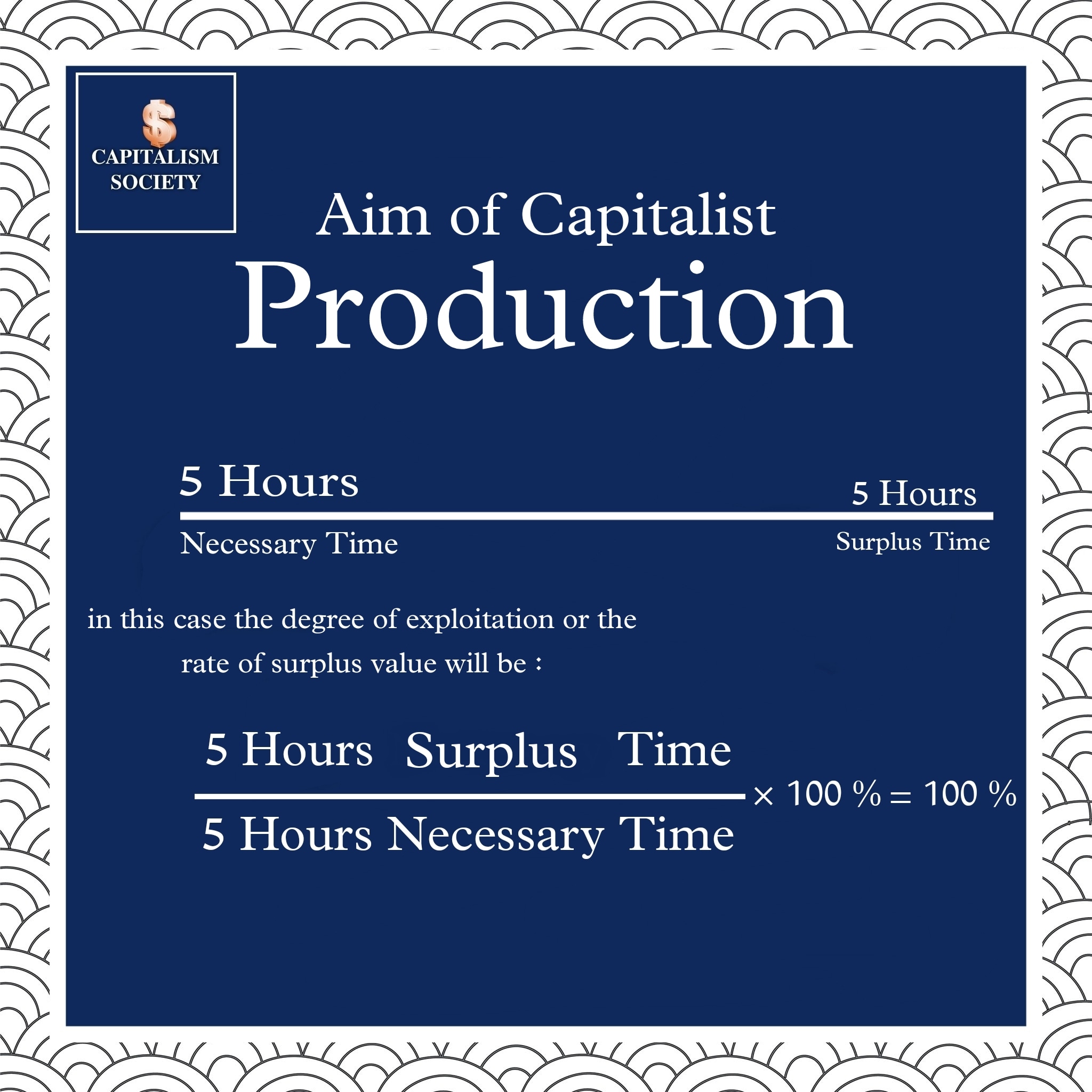
The conversion of surplus value into capital and its use for producing new surplus value is the aim of capitalist production . Capitalists always strive to obtain as much surplus value as possible with the least possible expendi tures . They use every possible means to achieve this aim . Capital displays inordinate greed for surplus labour . Accord ing to a British trade union leader , capital fears the absence of profit or too small a profit as nature fears a vacuum , but as long as there is a sufficient profit , it becomes audacious ; if you guarantee capital a 10 per cent profit , it will agree to any application ; a 20 per cent profit enlivens it ; at a 50 per cent profit it is virtually ready to break its neck ; at a 100 per cent profit it tramples all human laws , and if it could make a 300 per cent profit , there is no crime which it would not risk even on pain of hanging . The pursuit of surplus value was a powerful stimulus to the development of production unknown to either the slave owning or the feudal society . This stimulus created a large scale industry first in Europe and in North America and then throughout the world . At the same time the pursuit of surplus value engendered contradictions between capitalists and the workers and imparted an antagonistic the character to the development of capitalist production . For a capitalist only that labour is productive which produces surplus value . In order to increase the surplus value each capitalist strives to squeeze as much surplus labour out of the workers as possible . There are two methods of increas ing the surplus value . Let us examine them on a concrete example . Let us assume that the working day lasts 10 hours of which 5 hours are the necessary labour time and 5 hours are the surplus labour time .







 Capitalism Society