Greek colonisation progressed apace with the formation of the polises , stemming from those regions of Greece where the clan aristocracy was in power . By concentrating the land in its own hands and thus dooming the masses of freemen to impoverishment , it forced them to leave the land . They were joined by the poor of the cities and the polises , by craftsmen who had become bankrupt as a result of the grow ing competition of slave labour , by small and middle land owners . Many of the colonists were aristocrats who had emigrated from their polises for political reasons . The merchants were tempted to undertake distant journeys by the lure of great riches to be gained in salt , grain , metals and slaves . In the 8th – 6th centuries B.C. Greek colonies appeared on the Mediterranean Coast of present – day France , Spain and Italy , in the Nile delta , on the Black Sea and Azov Sea coasts . These were independent polises which maintained close cul tural and economic ties with the metropolis . Greek colonisation played a tremendous role both in the history of the Greeks themselves and of the peoples with whom they came into close and prolonged contact .
Despite the perfection of stone tools , the productivity of labour remained at a very low level . A drastic change in the productive forces of society took place in the 6th – 4th mil lennia B.C. , when man began to make his tools of metal . The use of metal tools resulted in a rise in the productive forces , significantly increasing the productivity of labour and , finally , bringing about a change in production relations and the life of humanity in general . In his constant search for materials from which to fashion his tools , primitive man came upon natural copper , a metal that could change its shape under the blows of a flint chop per . Man made use of these qualities , learning to make axes , knives , arrowheads and spear tips from copper . New materials and metal for tools were first used in the 6th millennium B.C. in various regions of Asia , Africa and Europe . Man learned to smelt metal in the 4th millennium B.C. in Africa , Asia Minor and India . He learned to make alloys of copper and tin . In the beginning , there was very little natural metal and , since it was of a very poor quality , it was a long time before man could give up his flint tools . Using tools of copper , bronze and , finally , iron he could work stone , wood , bone and horn with great skill , he learned to make metal hoes , scythes and other implements . It was at this time also that people began building their first large wooden houses . Man tried to copy the movements of his own hands in the simplest of mechanisms . Thus , the potter’s wheel and the first loom ‘ came into being . These first mechanisms improved the quality of the goods produced and raised the produc tivity of labour considerably .
The struggle of the Towns Against the Feudal Lords
The medieval towns were located on lands owned by feud al lords and were thus under their rule ; initially the feudal tract the greatest possible profit from it . That is why the bud ding town bodies of self – government had to enter into a conflict with the feudal lords . In the struggle to establish the rights of the town commun ity the entire population would rise up against the feudal lord . The outcome of thiş struggle determined the political structure of the town and its further dependence upon the feudal lord , from the right of the citizens to collect taxes to complete self – government . The self – governing towns , which became independent political units ( in France they were called communes ) , had their own courts , garrisons , finances , etc. The inhabitants of a city – commune were exempt from paying the usual taxes to the feudal lord . In Western Europe the self – governing city – republics first appeared in Italy , France , the Netherlands and , later , in Ger many in the 11th – 12th centuries ) . In the 11th century Nov gorod Veliky was a distinctive republic in Rus . Many towns , especially those which had arisen on royal lands , did not receive the right to self – government as com munes but enjoyed a number of privileges and freedoms . The elected town bodies acted jointly with representatives of the feudal lord or the royal officials . The town council was the supreme elected body in the towns ; it mustered the local guard , controlled the crafts and issued various ordinances . An elected citizen headed the town council . In France and England he was called a mayor , in Germany a burgomaster , etc. Small towns which had neither the necessary military force nor the means to oppose the feud al lord remained under the jurisdiction of the latter . One feature all the towns had in common was the fact that the inhabitants had achieved personal freedom . Any peasant who had lived in a town for a year and a day became a free man .In Asia the towns also fought against the feudal lords but , as a rule , these bitter struggles usually ended in the defeat of the former ; the inhabitants were thus unable to achieve self – government .
The flourishing of culture was accompanied by the first scientific approach to nature . Budding scientific thought was not yet divided into various fields ; there were as yet no distinct and separate sciences . The Ancient Greek naturalist philosophers observed all spheres of life , from astronomy to medicine . These first attempts at scientific research were , at the same time , an expression of a materialistic outlook on nature . The concept that man was not the creation of super natural forces but that the gods had been created by man’s imagination , was beginning to take root . The practical observation of natural phenomena was conducive to the formation of a materialistic outlook .
In the 19th century archeologists discovered the remains of extinct , highly developed primates called Dryopithecinae , or tree apes . Charles Darwin , the great English naturalist , and his followers analysed the evolution of the animal world over the course of many centuries and used these discoveries to scientifically prove the biological relationship between man and the animal world , as well as man’s evolution from the highly developed fossil apes . The proof of this theory was to be found in the data provided by anatomy , embryology , paleontology and , specifically , by the basic similarity of skel etal structure , brain development and the composition of the blood of modern man and the anthropoid apes . The develop ment of modern science has proved the validity of this mate rialist theory magnificently .
The idealist interpretation of the history of society in the Middle Ages is in complete opposition to the materialist understanding of the development of feudalism and its stages .
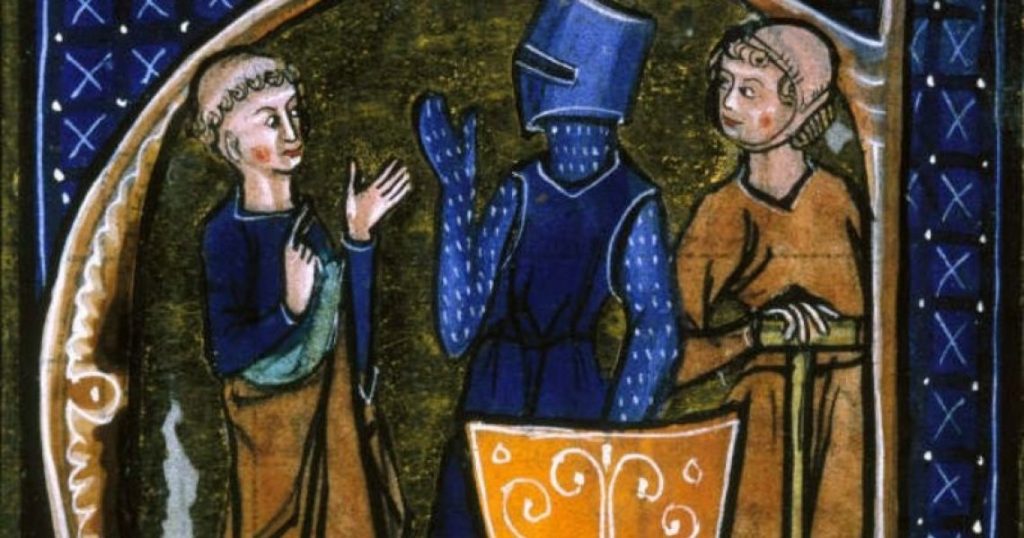
The term Middle Ages also exists in bourgeois literature , having been introduced by the Italian humanists as a means of indicating the intermediary period between the cultures of Greek and Roman Antiquity and the Renaissance in Italy and other European countries in the 15th – 16th centuries . Later , through the works of Bourgeois authors , this division into ancient history , the history of the Middle Ages and modern history was established . However , the majority of Western scholars do not relate these terms to any definite socio – economic processes but regard them merely as condi tional names . Some bourgeois scholars believe that the Middle Ages begin with the onset of the Christian era , others , with the 5th century , the time of the fall of Western Roman Empire . They also hold different views on the period which ends the Middle Ages : from the 14th to the 16th centuries . Withal , their chief aim is to prove that there was no revolutionary upheaval in social relations in the transition from Antiquity to the Middle Ages . Various bourgeois authors approach this question in accord ance with their own political beliefs . Two questions have been at the centre of the dispute : the significance of the invasion of the German tribes and the historical role of the German commune ( mark ) in regard to the states that emerged on the territory of the former Roman Empire . Waitz , Sohm , Brunner and other 19th – century chauvinist German historians portrayed the fall of the Roman Empire as the triumph of the German ” national spirit ” over the decadent Roman society , never mentioning the role of the commune in estab lishing new social relations . The French historian Fustel de Coulanges ( late 19th century ) ignored the very existence of the agricultural commune . In his attempt to prove the eternal nature of the wealthy class and the exploitation of the masses by the aristocracy he was a proponent of the so – called patri monial theory . He stated , without any proof , that the mark had never existed and that the patrimony was allegedly the basis of the medieval economy ; ” he further contended that it had appeared , fully formed , in the Middle Ages from the Later Roman Empire . Fustel de Coulanges , Du Bos , and the English historian Seeboh all denied the fact that the German tribes had con quered the Roman Empire , stating that what had actually occurred was a gradual penetration of Roman society by the
German tribes , a fact that in no way changed the nature of Fustel de Coulanges opposed the so – called commune theory . However , the bourgeois historians who supported this theory that society . ( Maurer and others ) misrepresented the true role of the primitive – communal system of the German tribes and especi ally the commune in the establishment and further develop ment of feudalism . Maurer believed the commune , patterned on the ancient German clan , was the immutable basis of life in medieval society . The reactionary historian Dåpsch also attempted to prove there was no leap in the transition to the Middle Ages . He contended that the ancient German tribes , far from causing any damage to Roman civilisation , had become its proponents and preservers and that their social system was allegedly no different than that of Roman society . All this , according to Dopsch , proved the absence of a revolutionary upheaval in the transition to the Middle Ages . He further contended that the essence of both systems was large – scale private prop erty which had existed from the beginning of time . In this respect , his opinions coincide with those of many contem porary bourgeois authors . Bourgeois historians also use the term feudalism , but the meaning they put into it is quite different than that described above . One can follow the evolution in their opinions on this question . François Pierre Gizot and other 19th – century bourgeois historians regarded feudalism as a system of vassalage and considered its basic feature to be political disunity . They did not accept the theory of the development of human society and rejected the idea of changing socio – economic formations . In their opinion , vassalage was connected with the early land relations and the predominance of the patrimony . Henri Sée , one of the most prominent bourgeois historians of the 20th century , also believed feudalism stood for political disunity . He saw no difference between the Roman latifun dium and the medieval feudal estate . According to Sée , feudal property was an estate which belonged completely to the Contemporary bourgeois historians have digressed still further from the scientific understanding of the term feudal ism . Thus , the American historians Strayer and Colburn
believe feudalism is not a system of definite social relations , but an extremely conditional term which stood for different things at different times . In their opinion feudalismi is , firstly , a ” method of administration ” and not an economic and social system , and , moreover , a method which kept changing ; feudalism was allegedly related to landownership , the fief , in name only . They held that the political rule of the feudal lord was in no way connected with any social or economic processes . That is why with equal facility they find feudalism in Meso potamia and Ancient Egypt in the 3rd millennium B.C. and in China , on the Arabian Peninsula and in Western and Eastern Europe in the 1st millennium B.C. , while India and Russia , according to these historians , allegedly by – passed feudalism completely . This outlook is typical of those bourgeois historians who deny the scientific periodicity of history and ignore the facts of reality , both in the past and in the future , if they do not comply with their political beliefs .
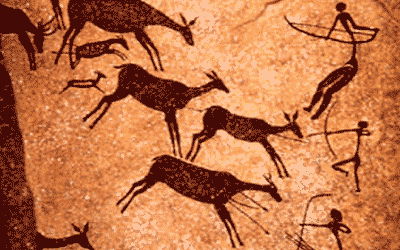
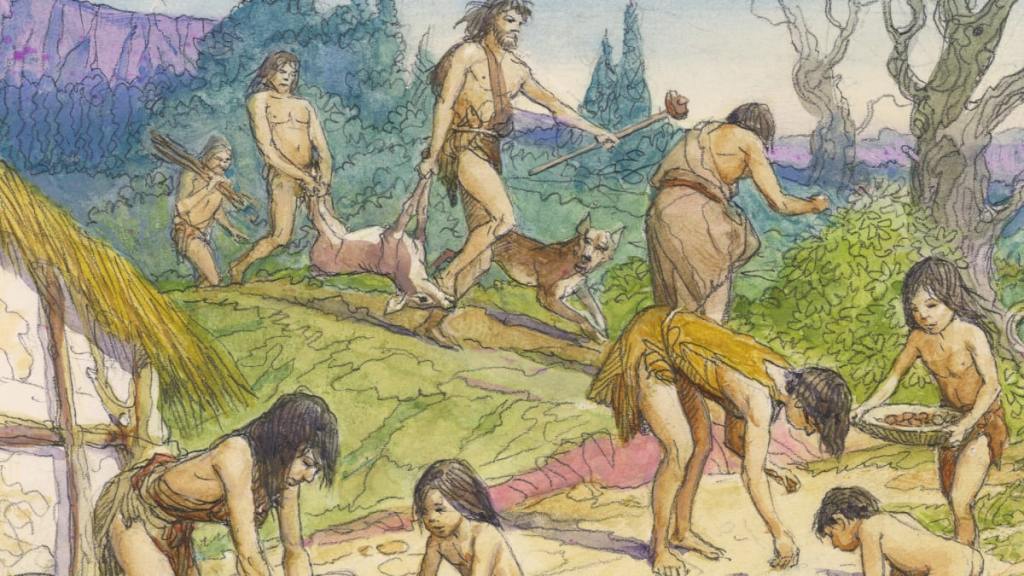
One hundred thousand years ago mankind entered a new stage of development . At this time the climate of the Northern Hemisphere changed drastically . Glaciers from the north began moving southward . The greater part of Europe was covered by ice . In the warmer countries the rains began . 🔶The present – day Sahara Desert was once an area covered with lakes , rivers and grassy plains interspersed with dense tropical forests .🔻 All heat – loving plants and animals either died out or migrated to the tropics . These animals were supplanted by new types , such as the mammoth , the reindeer , the polar fox , etc. But primitive man survived and continued to develop through his ability to work . The remains of Neanderthal Man , who lived during this time , were found in Europe ( Germany , Spain , Belgium , Yugoslavia , France and Italy ) , Asia ( Pakis tan , Iraq , Java and other regions ) , South Africa and the So viet Union ( in the Crimea and Central Asia ) . The progress of society was determined by the further devel opment of the productive forces . Man’s tools became still more diverse and specialised . As before , his basic tools were made of stone , but they were being constantly perfected . The cutting edges were specially sharpened ; there were now flint daggers , arrowheads , scrapers for working hides , etc. The perfection of these tools brought about the development of new skills and increased productive experience . The use of more perfect tools spurred the development of hunting , which now became primitive man’s major occupa tion . Hunting was done in groups , hunting parties were organised to trap large animals , to force them into swamps , etc. Now man remained for a longer period of time on good hunting grounds where he sought shelter not only in the nat ural caves he found , but in the simplest structures he himself constructed to protect himself from the elements .
Beginning with the 700th millennium B.C. , man began to fashion his first tools from stone . Later , he cracked and crushed stones to make his first crude stone implements with a cutting edge . Besides these primitive stone tools he also fashioned wooden tools such as sticks with sharpened tips , clubs , etc. From now on man consistently improved his tools to fit his purposes . He would sharpen both sides of a stone to make a chopper , a large universal tool with which he could chop , cut , strike an enemy and even dig . Such tools were made and used by a type of fossil man close in develop ment to the Pithecanthropus . At this stage , the invention of the chopper was man’s greatest achievement . The next stage in man’s evolution and in the development of the production of material values took place 500,000 to 300,000 years ago , when the first sharp oval choppers , chipped from all sides , came into use as did basically new tools especially fashioned for striking , cutting , digging , etc. In order to fashion the various scrapers , spears and other tools , man had to be skilled enough to strike the stone he was working on with great accuracy . This proves that in the process of production the human organism evolved and its co – ordination was perfected . 🔷The introduction of new tools brought about a change in primitive man’s entire way of life . With the aid of these new tools he could hunt such large animals as elephants , rhinoc eroses , buffalo , stags and horses . Now he could extract more food from the same area than formerly , and this made it pos sible for him to remain in a given area for a longer period of time . Primitive man began to set up temporary camps in places conducive to hunting : near lakes and rivers , along animal paths and the edges of forests , using caves for shelter .🔹
Utopian Socialism Until the middle of the 19th century the workers were for the most part under the influence of bourgeois ideas or were guided by ideas of utopian socialism . Utopian socialism originated much earlier , with the appearance of capitalism and the working class . It expressed primarily the protest of the working class against oppression and exploitation , and its striving to establish a new and just system . The first and communism representatives of utopian socialism Thomas More ( 1478-1535 ) , Tomaso Campanella ( 1568 1639 ) , François Noel Babeuf ( 1760-1797 ) , Morelli and others seriously criticised the shortcomings of the exploiter society and suggested a number of ideas about organising a new and just society . In their opinion the new society must establish equality of all people in all walks of life – political , economic and spiritual . What they could not say , however , was how this new society should be created . As a rule , they pictured the new society as something removed from real life . For example , Thomas More placed his new society on an imaginary island called Utopia , and since then the word utopia has become a synonym for everything unreal and unattainable . In the 19th century utopian socialism further developed by Saint – Simon ( 1760-1825 ) , Charles Fourier ( 1772-1837 ) and Robert Owen ( 1771-1858 ) . They saw the contradictions of capitalist society and justly held that the bourgeois revolution had brought the working people neither freedom , nor equality , nor yet fraternity , although these revolution . The utopian socialists was demands had been inscribed on the banner of the bourgeois branded capitalism , exposed its sores and vices , and opposed to it the ideal of a new social system without exploitation and social antago nisms . The utopian socialists of the 19th century recognised the importance of developing production in order that the socialist principle of distribution according to labour might be carried into effect and the basic needs of the people might be satisfied . They even ventured to suggest a definite way of transition from capitalist society to socialist society . Fourier , for example , believed it necessary to organise phalanges . He borrowed this idea from Philip of Macedon , ancient Greek military leader who lined up his troops in separate shock groups – phalanges . According to Fourier , the new society must be organised in a manner of the phalanges ; it must consist of communities of 300-400 families ( about 1,500-1,600 people ) building their life on socialist principles . The example set by these communities was supposed to 6 ° convince the other people of the necessity of building a new society . After publishing his book , setting forth the main ideas about building the new society , Fourier hoped to find a ” good ” capitalist , who would voluntarily give up his capital , and enthusiasts who would want to work in order to build the new society , i.e. , to create a phalange . He asked for volunteers to call on him at any time , but nobody called as long as he lived . Fourier died without ever understanding why his idea had not met with approval . Saint – Simon even invested his money in setting up a small society and tried to arrange life in it on new principles , but that society soon changed to a usual capitalist enterprise with all its contradictions . Why did the utopian socialists fail ? They failed because they had not created a true science about society . In their theories they rested a good deal upon the bourgeois ideas that human nature is invariable and that society is always governed by the same laws . They thought that social laws were like physical laws ; they made no distinctions between capitalists and workers and held that all people could be divided into good ones and bad ones . They believed that , as similar charges repelled and opposite charges attracted each other in nature , people with similar inclinations were unable to get along with each other and those with different tendencies got along very well in society . This erroneous application of physical laws to the study of society was due not only to the influence of bourgeois ideas , but also to the inadequate development of the social and natural sciences of that time and the low level of development of capitalism and the working – class movement , which made it impossible to work out a scientific theory of social development . The utopian socialists could not uncover the laws govern ing the development of capitalist society and find the social force capable of becoming the creator of the new society .
By the 10th century Kiev was an important Russian city . At this time Novgorod , too , was established as a major cen tre of crafts and trade . The cities of Chernigov , Smolensk and Polotsk all played an important part in the economic life of Ancient Rus . Moscow appears as a city with extensive trade routes in the 9th century and began to develop rapidly in the middle of the 12th century , becoming the capital of the principality of Muscovy early in the 13th century . The majority of Russian cities were built according to the following plan : a fortified area with a moat and very thick walls ( a kremlin ) was erected in the middle of a town ; this was the residence of the duke or military commander , his garrison and courtiers . Settlements of merchants and crafts men were located around the kremlin . The ancient Russian cities traded with the regions along the Volga , the Caucasus , Byzantium , Central Asia , Iran , the Arab ian countries and the countries of the Mediterranean . There was extensive trade between Muscovy and the Northern Slav ic Pomorye , Scandinavia , Čechy , Moravia , Poland , Hungary , Germany and other countries .







 Capitalism Society